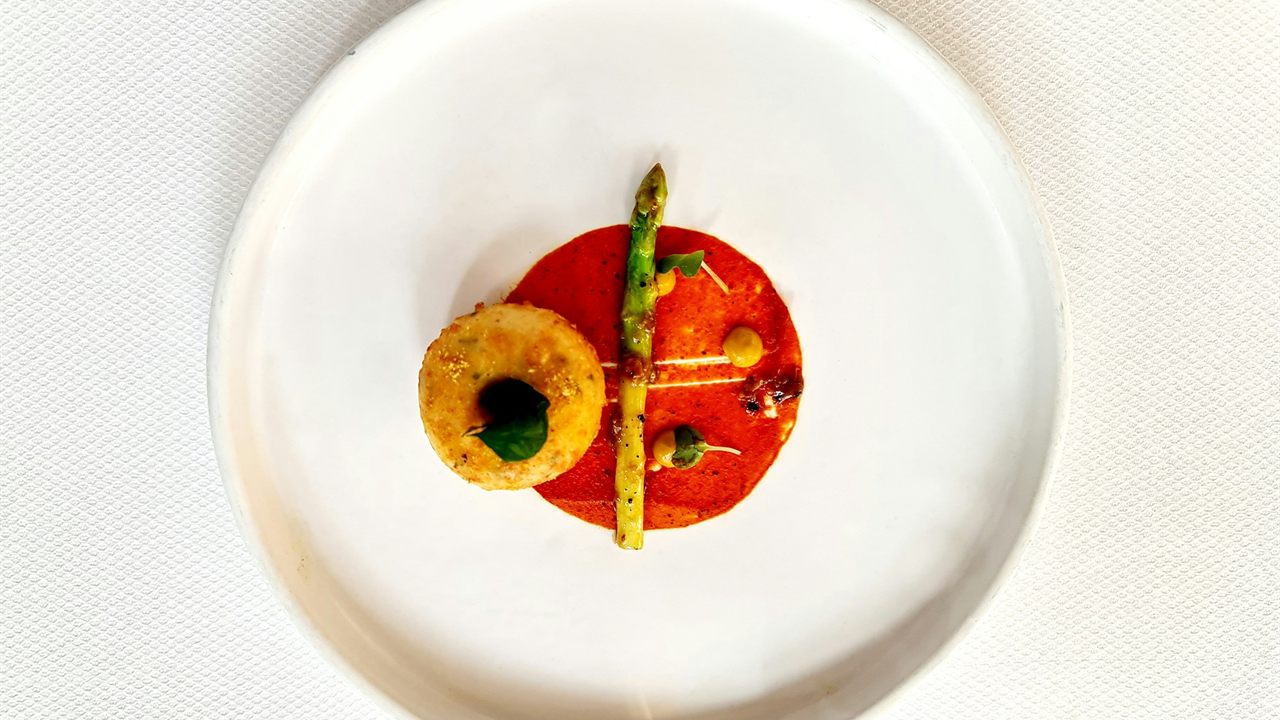
A dinner in courses feels like an occasion in a way that one big plate never does. The table settles, conversation has room to breathe, and each dish gets its moment. A four course dinner at home sounds ambitious, but the structure is simple once you know what each course is for and how the kitchen keeps up with the table.
This guide is for anyone planning a coursed meal in a home or a mountain rental, whether you are cooking it yourself or handing it to a chef. By the end you will know the order of the courses, how big each should be, how to pace the evening and what can be made ahead.
The four courses and what each one does
Every course has a job. When you know the job, choosing the dish gets easier, and the meal has a shape rather than four unrelated plates. Every menu from The Mobile Chef follows this same sequence: a starter, soup or salad, entrée and dessert.
The table below compares the four courses by role, size and a few examples from our menus.
| Course | Its job | Size | Examples |
|---|---|---|---|
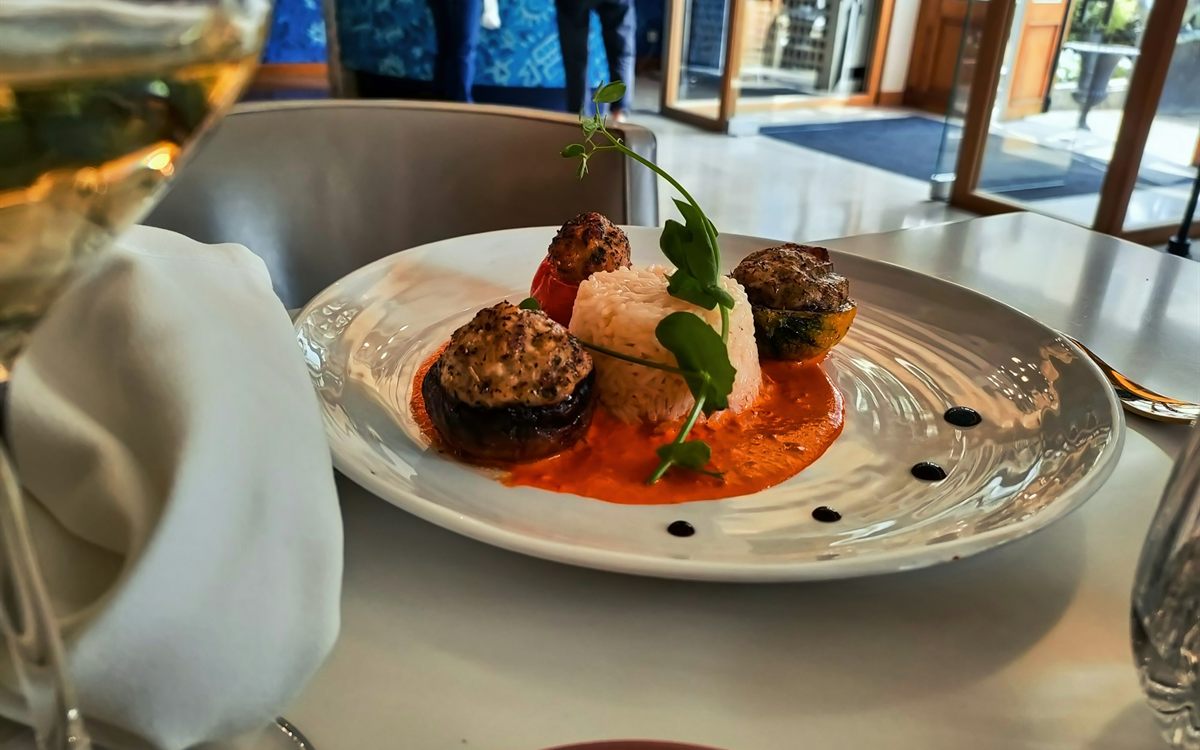
| Starter | Welcome, take the edge off hunger | A few bites | Stuffed mushrooms, steamed dumplings with satay sauce |
| Soup or salad | Reset the palate, slow the pace | A cup or small plate | Greek avgolemono soup, dinner salad with gorgonzola and walnuts |
| Entrée | The centerpiece | The largest plate | Beef fillet with asparagus, chicken piccata |
| Dessert | A sweet close | One modest slice | Fruit tart, tiramisu |
The starter
The starter is a greeting. It should be easy to eat, a little salty or savory, and light enough that nobody is full ten minutes in. A shrimp cocktail platter or a brie cheese and fruit platter can even go out in the living room while the last guests arrive.
Soup or salad
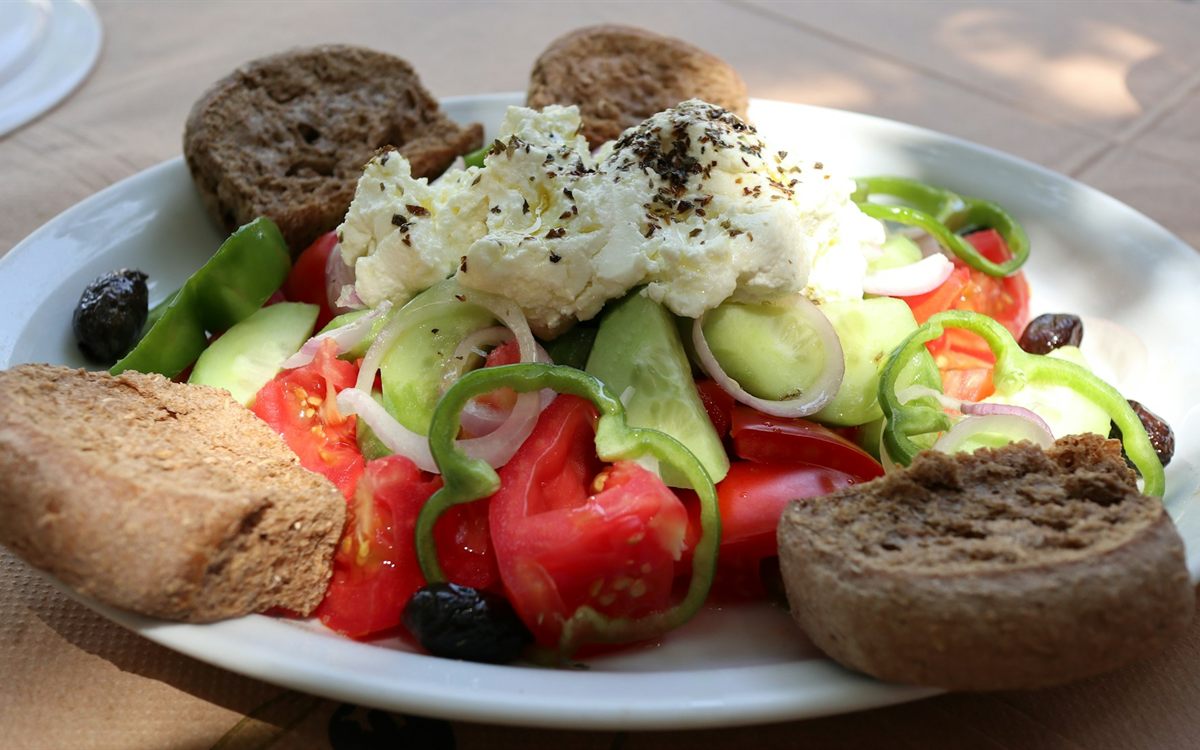
The second course slows the evening down and freshens the palate after something rich. A Greek salad with feta and olives brings sharpness; a warm avgolemono soup suits a cold mountain night. Pick one, not both, so the table still has an appetite.
The entrée
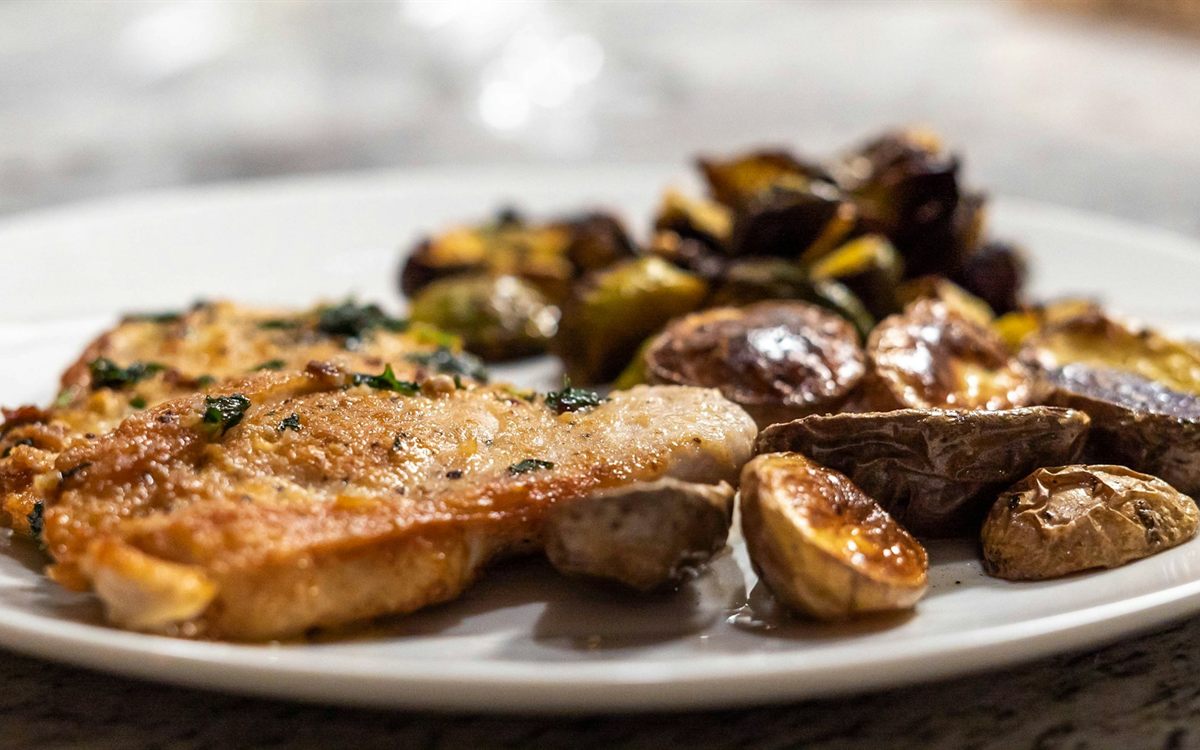
This is the plate people remember. Build it around one protein and two sides, such as grilled pork tenderloin au jus with roasted red potatoes and a sautéed vegetable medley, or arugula stuffed chicken breast with rice pilaf with almonds. Poached fish with tomato and cumin suits a table that wants something lighter.
Dessert
Dessert closes the meal, so it should feel like a treat rather than a fifth course. A fruit tart is bright after a rich main; tiramisu suits a lighter one.
Portions for a four course dinner at home
The most common mistake with a four course dinner at home is serving each course as if it were the only one. By the entrée, guests are full and the best plate goes back half eaten.
- Keep the first two courses small. A few bites, then a cup of soup or a side plate of salad.
- Give the entrée the most room, but not a holiday-size helping.
- Size dessert to the evening. After a big main, a thin slice is enough.
For the numbers behind a group meal, our guide on how much food per person to plan for a mountain group gives ranges by course.
Pacing the evening
A coursed dinner works because of its rhythm. Each course arrives, is eaten, and is cleared before the next comes out. Nobody sits in front of an empty plate for long, and nobody is rushed.
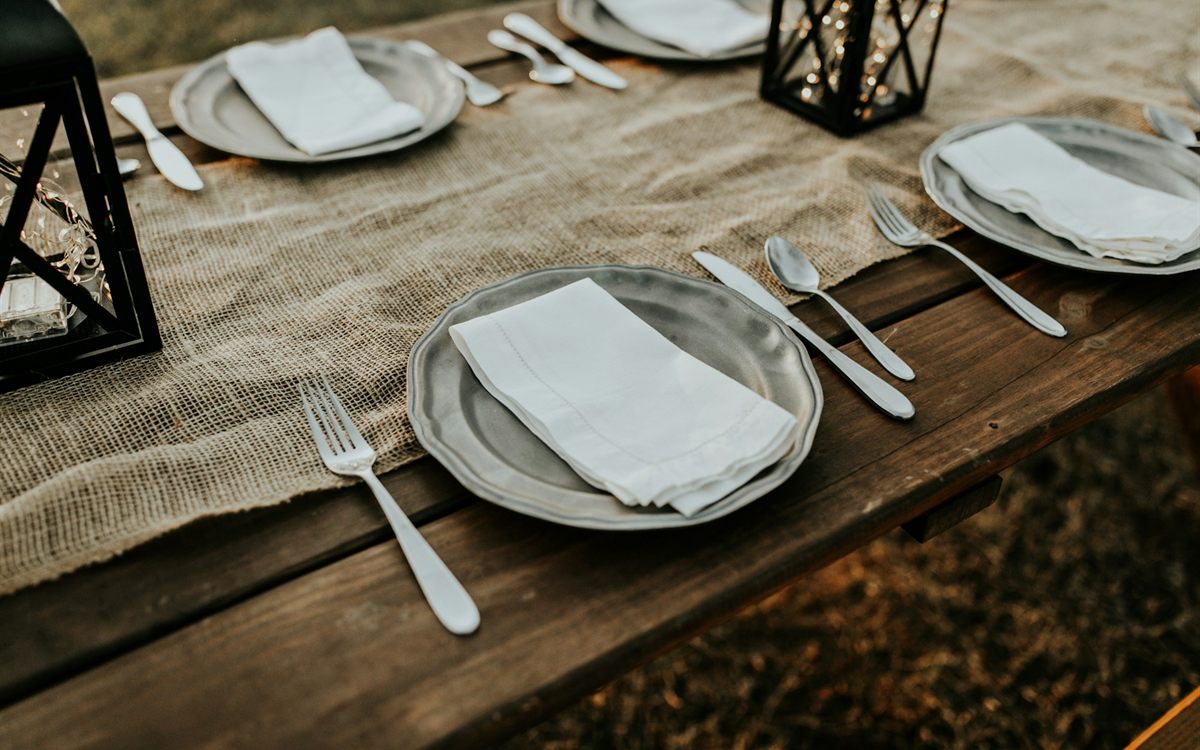
A few principles keep it smooth:
- Clear before you serve. The table should be empty of the last course’s plates before the next one lands.
- Pause, but not too long. A short break lets people talk and digest. A long one makes them wonder whether dinner is over.
- Serve everyone at once. Plates that arrive together keep the table eating together.
- Let the table set the speed. A lively group may want a longer gap before the entrée; a tired one after a ski day will want things to keep moving.
- Save toasts for the gaps. The pause before the entrée or dessert is the natural moment.
If there are children at the table, let them leave between courses and come back for dessert. How the plates reach the table also changes the pace, which our guide to family style vs plated dinner service compares in detail.
The make-ahead plan for the kitchen
The secret to a coursed meal is that most of it is not cooked while guests are eating. Split the menu into what can be finished ahead and what must be cooked to order.
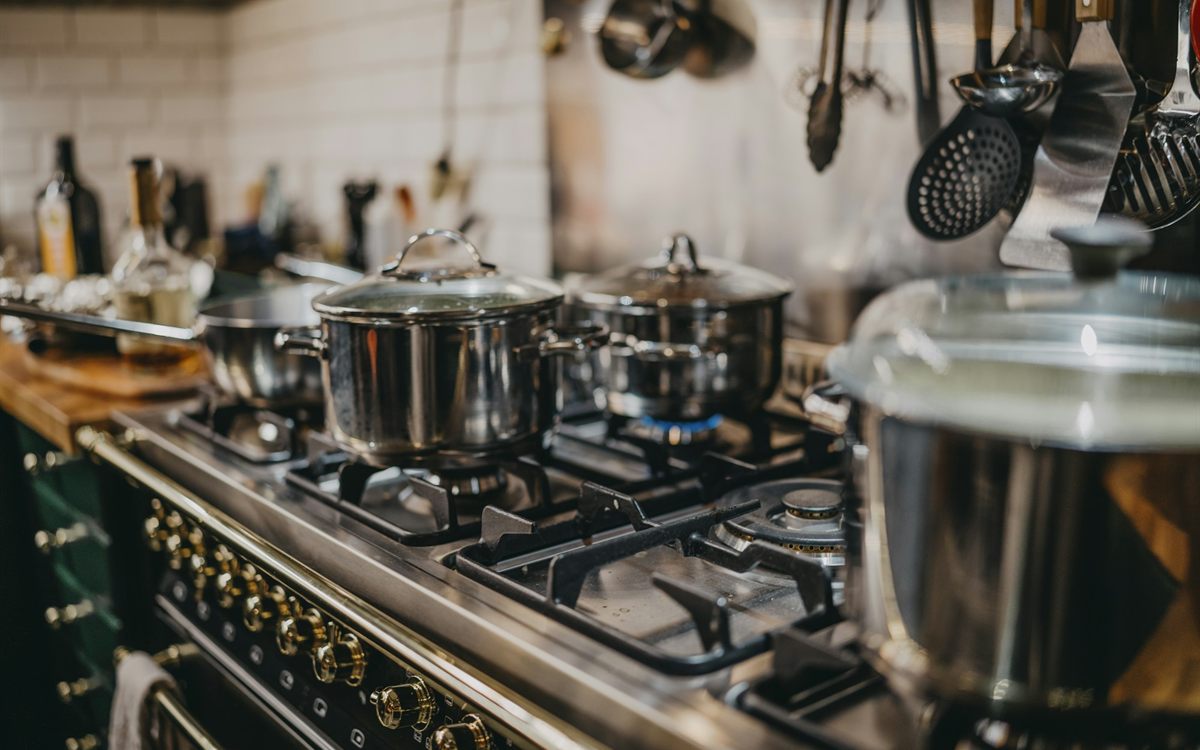
- Ahead: dessert, salad dressing, washed greens, cold starters and most soups.
- Just before guests arrive: warm starters, ready to go in the oven.
- To order: the entrée, which is timed to the end of the second course.
Soup is the classic make-ahead course, but it needs care. The University of Nebraska-Lincoln Extension advises cooling soup in shallow containers no more than two inches deep, not leaving it at room temperature for more than two hours, and reheating it until steaming hot, at least 165 °F.
Wine across the courses
Drinks follow the same arc as the food, lighter at the start and fuller with the entrée. Our guide to how much wine to buy for a dinner party shows how to split the bottles by course.
Cooking it yourself or hiring a chef
A four course dinner is very doable for a confident home cook. The catch is that the cook spends most of the evening in the kitchen, and in a rental that kitchen is unfamiliar.
The table below compares cooking it yourself with handing it to a private chef.
| Factor | You cook | A private chef cooks |
|---|---|---|
| Planning and shopping | Yours | Handled by the chef |
| Host at the table | Between trips to the stove | All evening |
| Pacing | Set by the cook’s speed | Set to the table |
| Dietary needs | Separate dishes to manage | Planned into each course |
| Cleanup | Yours | Included |
With The Mobile Chef, every menu comes as four courses, and pricing includes food costs, preparation, serving, sales tax and clean-up. Gluten-free, vegetarian, vegan and allergy needs can be planned into each course, as our guide to gluten-free and allergy-friendly private chef dining explains. If guests are joining you at a rental, read how to host a dinner party in a vacation rental first.
Frequently asked questions
What is the order of courses in a four course meal?
The usual order is starter, soup or salad, entrée and dessert. The two lighter courses come first so guests reach the main course with an appetite.
Is salad served before or after the main course?
In most American dinners, salad comes before the entrée as the second course. Some European meals serve it after the main, but at home either works if it suits your menu.
What can I make ahead for a four course dinner?
Dessert, dressings, cold starters and soup can all be made ahead. Cool soup quickly in shallow containers, then reheat it until steaming hot before serving.
How much does a private chef cost for a multi course dinner?
With The Mobile Chef, menu pricing begins at $79 per person, based on menu, group size and style of service. Children under 12 are half price.
To plan the courses for your own table, browse our menus and pricing and see how a private chef in Summit County brings a multi course dinner to your rental, or call (970) 333-1788.