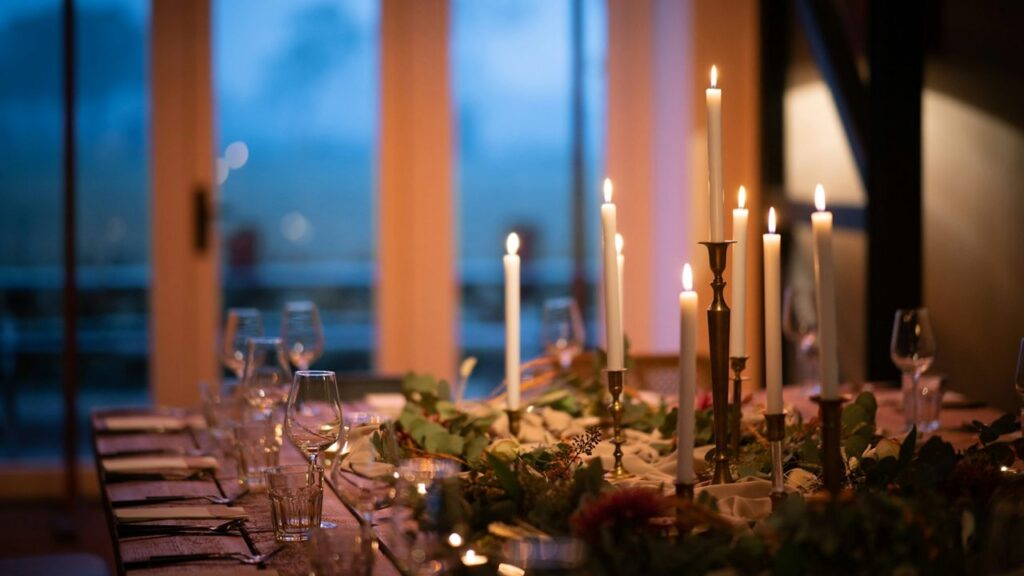
The food can be perfect and the evening still fall flat if two quiet people end up side by side at the far end. Good dinner party seating arrangements fix that before anyone sits down. They take ten minutes with a pencil and they change the whole night.
This guide is for anyone hosting eight, ten or fourteen people, at home or around whatever table a vacation rental provides. By the end you will know when to assign seats, which traditions still help, how to build a seating chart step by step, and how to handle long, round and oddly shaped tables.
Do you need a seating chart at all?
Not always. Four to six close friends will sort themselves out, and a plan can feel stiff. Once the group passes eight, or mixes people who do not know each other, a plan stops being formal and starts being kind. Nobody has to hover with a plate, wondering where to sit.
A simple guide:
- Up to six guests: let people choose, but steer one or two with “come sit by me.”
- Seven to ten guests: plan the key seats (hosts, guest of honor, anyone new) and leave the rest loose.
- Ten or more, or a celebration: a full dinner party seating chart with place cards.
Traditional and modern dinner party seating arrangements

Etiquette guides still describe the classic plan, and parts of it remain useful. Other parts have softened, and most hosts now choose what suits their group. The table compares the two views.
| Custom | Traditional view | Modern view |
|---|---|---|
| Hosts | At the two ends of the table | Ends, or facing each other mid-table |
| Guest of honor | At the host’s right | Still common, and easy to keep |
| Couples | Always split up | Split if guests know others; together if not |
| Men and women | Alternate around the table | Optional; mix by personality instead |
| Place cards | At every formal dinner | Above eight guests or for occasions |
What tradition gets right
The core of protocol is practical. Georgia Tech’s special events office summarizes it as hosts opposite each other, the guest of honor to the host’s right, then the remaining guests alternating on either side. The same guidance notes that the best plan may mean breaking protocol, for example at informal events or to seat people by shared interests. That is the modern view in one sentence.
What has softened
Alternating men and women was a rule for evenly matched couples at formal dinners. Many tables today are not shaped that way, and nothing requires it. Mixing by temperament, interests and familiarity does the same job: it spreads the conversation around.
Splitting couples is a judgment call. Partners who know the room can sit apart and meet someone new. A partner who knows nobody else is better beside their person, or at least within easy reach.
How to build a dinner party seating chart
Draw the table on paper, mark every chair, and fill the seats in this order. It takes about ten minutes.

- Seat the hosts. Put at least one host closest to the kitchen so they can slip out without crossing the room.
- Place the guest of honor at a host’s right, or in the center of a long side where everyone can reach them.
- Spread your connectors. The two or three easy talkers go in the middle of each long side, never all at one end.
- Pair new guests with kind ones. Anyone who knows few people sits next to a warm, curious neighbor and across from a friend.
- Separate the friction. Old rivals, exes or two people who only talk shop sit apart, ideally not facing each other.
- Handle the practical seats. Left-handed guests take a corner or an end, so elbows do not clash. A guest with mobility needs sits near the exit with room for a chair. Children sit near a parent and the end of the table.
- Check sight lines. Read the plan once more and ask whether every guest has someone they will enjoy on at least one side.
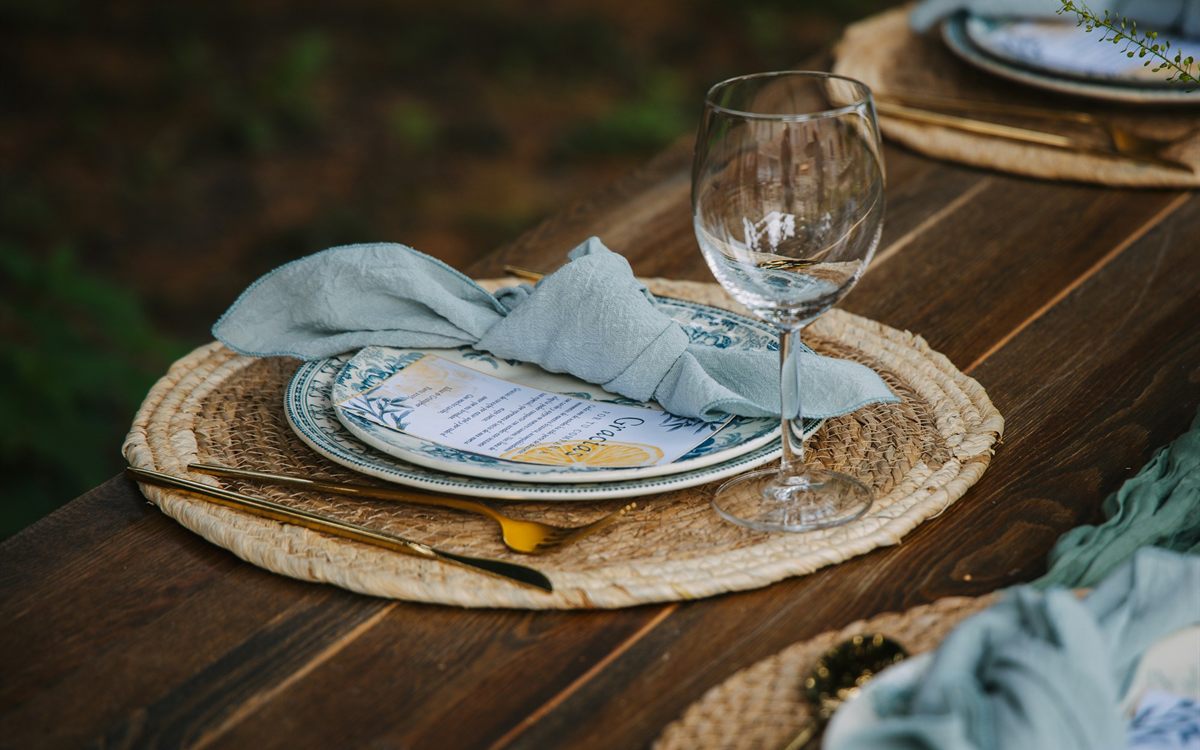
Write the names on cards and set them out with the place settings. Our guide to how to set a dinner table covers what goes at each place.
Seating at long, round and odd rental tables
Rental furniture rarely matches the party. A ski house may sleep fourteen around a table built for ten, or offer a round table, a kitchen island and a bench. The plan has to fit the furniture you actually have.

This table compares common shapes and how to seat them.
| Table | Strength | How to seat it |
|---|---|---|
| Long and narrow | Fits big groups | Hosts mid-table, talkers at the center |
| Round | Everyone can see everyone | No head seat; alternate quiet and lively |
| Square | Good for four to eight | Two per side, couples on corners |
| Two tables or island plus table | Uses all the space | A host or connector at each |
| Benches | Squeezes in extra people | Kids and nimble adults; chairs at the ends |
Long tables
At a table of twelve or more, the people at each end cannot hear each other. Seat the hosts facing each other in the middle of the long sides instead of at the ends, so the conversation radiates from the center.
Two tables
When the group outgrows one table, treat it as two small dinners. Give each table a host or a confident connector, and swap a few people between courses or before dessert. A kids’ table works best within sight of the adults. Our guide to family ski vacation dinners has more on feeding mixed ages.
Seating around the service
How the food arrives changes the plan. With family style or plated service, guests either pass platters along the table or have plates set in front of them.

- Family style: leave room in the center for platters, and seat confident servers near each one.
- Plated: keep a clear path behind the chairs on at least one side, so plates can be set and cleared.
- A chef in the kitchen: seat the hosts where they can catch the chef’s eye between courses.
When The Mobile Chef cooks in a rental, the chef serves and clears, so the hosts can stay seated with their guests. Our group dinner ideas for a Breckenridge ski house help match the menu to the evening, and dinner party etiquette for hosts and guests covers the rest of the night.
Frequently asked questions
Where should the host sit at a dinner party?
Traditionally at one end, with a co-host at the other. At a long table, facing each other mid-table works better, and one host should sit nearest the kitchen.
Where does the guest of honor sit?
At the host’s right is the traditional seat and still a good one. At a big table, the middle of a long side lets the most people talk with them.
Should couples sit together at a dinner party?
It depends on the group. Split them when both know other guests, so the table mixes. Seat them together when one partner knows nobody else.
How do you seat an odd number of guests?
Odd numbers are fine. Put a host at one end and two guests at the other, or seat everyone along the sides. Nobody needs a perfect mirror.
Planning a dinner for a group in Breckenridge, Frisco, Copper Mountain or Keystone? Our private chef dinners served at your rental table are built for smaller groups. Call (970) 333-1788 to talk through your dates.