
The platters went out at five. It is now past seven, guests are still arriving from the slopes, and the shrimp is looking lonely. How long can food sit out before it has to go? There is a clear answer, but most guides stop at the number and leave you to work out what it means for a real party.
This guide is for anyone hosting at home or in a rental. By the end you will know the rule, the foods that fall outside it, and how to run a grazing table, an après spread or a buffet through a long evening.
How long can food sit out: the two hour rule
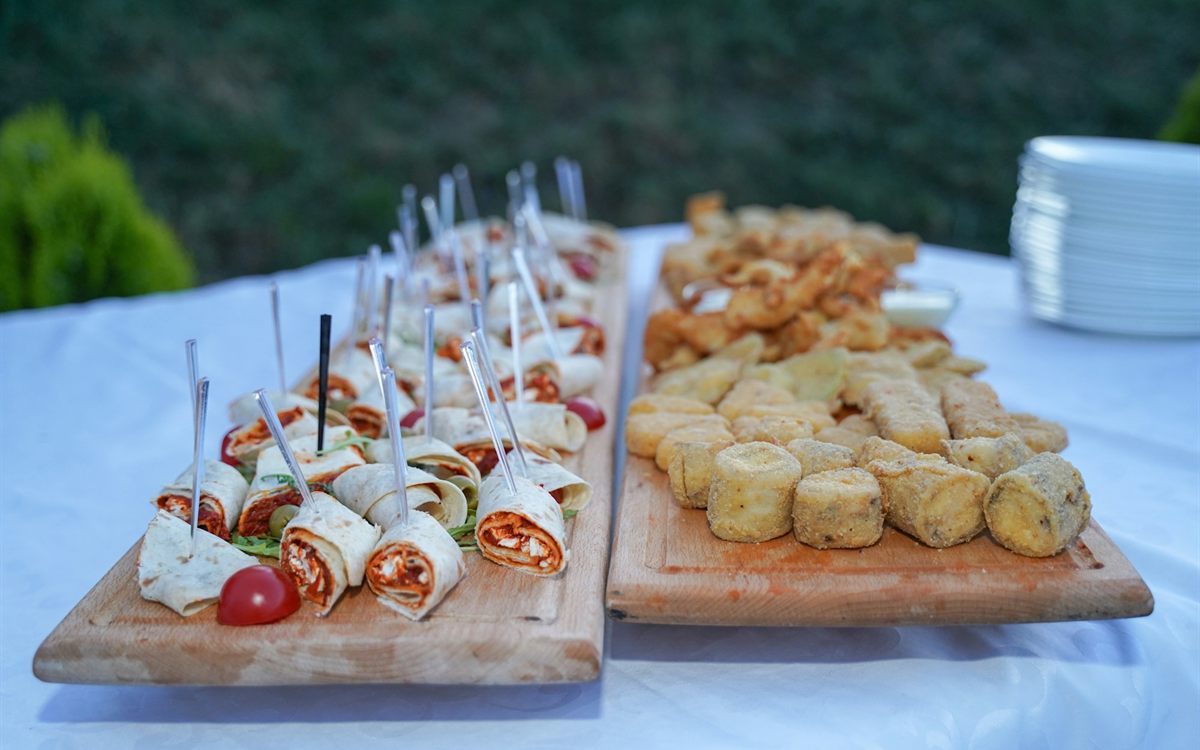
The rule is short. The FDA’s guide to serving up safe buffets says to discard perishables left at room temperature for more than 2 hours, unless you are keeping them hot or cold. The CDC gives the same limit and names the range between 40 and 140°F as the danger zone, where bacteria can multiply rapidly.
University of Nebraska-Lincoln adds a detail hosts tend to miss: those 2 hours include the time food sits on the table during the meal. The clock does not begin when guests start eating. It begins when the food leaves the fridge or the oven.
This table shows how the limit changes with the conditions.
| Condition | Limit | What to do |
|---|---|---|
| Room temperature | 2 hours | Discard or swap the dish |
| Above 90°F | 1 hour | Serve in small rounds |
| Hot, at 140°F or above | Outside the 2 hour rule | Check with a thermometer |
| Cold, at 40°F or below | Outside the 2 hour rule | Keep plates on ice |
Why a cool room does not change the rule
Your condo is chilly, the deck is colder still, and it feels as if the rule should bend. We found no food safety source that sets a longer limit for a cool room. The FDA’s line is 40°F, and a room you can sit in comfortably is well above that.
A snowy deck is not a safe substitute either. It might be cold enough, but sun, wind and an open door make it hard to say for how long. If you want to use it for drinks, go ahead. For shrimp, use the fridge or a tray of ice.
Warm weather runs the other way: a summer deck or a car in the sun can pass 90°F, and the CDC cuts the limit to 1 hour there.
What the clock covers, and what can stay out

Not everything on the table runs on the same clock. Mississippi State University Extension’s charcuterie food safety advice sorts a board into foods that can stay out and foods that cannot.
| Group | Examples | Plan |
|---|---|---|
| Can stay out | Crackers, bread, nuts, dried fruit, shelf-stable cured meats | Refill as needed |
| About 2 hours | Most fresh fruit and vegetables | Restock through the event |
| 2 hours, strictly | Refrigerated meats, soft cheeses, dips, shrimp, cooked dishes | Small amounts, swapped often |
| Sources differ | Hard and semi-hard cheese | Treat as 2 hours if unsure |
That last row needs a plain note. Mississippi State says hard or semi-hard cheese can be left out, while general guidance often puts all cheese under the 2 hour limit. Some websites quote a much longer time, but we could not find a food safety authority behind it, so we do not repeat it. Soft cheese such as brie is firmly on the 2 hour side.
Applying the rule at your party
Each kind of spread has its own weak spot. Here is how to handle the three most common ones.
Grazing tables

A grazing table invites people to linger, which is exactly the problem. Build the long-lasting foods into the table itself, then bring the perishables out in small groups. Mississippi State suggests putting refrigerated meats and soft cheeses out in small amounts and swapping them often, and keeping dips in small bowls.
Wash a container before you refill it. Our wine and cheese party ideas help you choose what goes on it.
Après platters
Après is the hardest case, because nobody comes off the mountain at the same time. Put out one platter when the first skiers get back and keep the second in the fridge. Note the time. Our guide to après-ski platters for your Breckenridge rental covers what to serve.
Buffets

The FDA advises preparing several small platters ahead of time, then replacing dishes rather than adding fresh food to one already out. A topped-up dish mixes new food with food that has been out, and the clock stays on the older portion. Our guide to how to set up a buffet table that flows has a layout, and food stations for a party offers another way to split the crowd.
A simple way to track the clock

You do not need a thermometer on every plate. You need a habit, and these steps work for a four-hour party:
- Divide the food. Split each perishable into two or three small platters.
- Keep the backups cold or hot. Spares wait in the fridge. Hot dishes wait in an oven, which the FDA says can be set at 200 to 250°F.
- Note the time. Set a phone timer for 2 hours as each round goes out, or write the time on tape.
- Swap, do not top up. When the timer sounds, take the platter away and bring a fresh one.
- Use ice for cold plates. Set dishes over a tray of ice and top it up as it melts.
- Check your warmers. The FDA warns some hold food at only 110 to 120°F. Our guide on how to keep food warm for a party covers the better methods.
A second pair of hands makes this far easier. Ask one guest to take the 7 o’clock swap so you can sit down.
When the time is up
Throw it out. University of Nebraska-Lincoln is clear that reheating may not make food safe, because some bacteria, such as staph, can form a heat-resistant toxin that cooking cannot destroy. Food can also look and smell fine while being past its limit.
Food that went back in the fridge before 2 hours is fine to keep for later. Our guide to how long leftovers last takes it from there.
Frequently asked questions
Is food safe if it has been out for 4 hours?
Perishable food that has sat at room temperature for 4 hours is past the limit and should be thrown out. Crackers, bread and nuts are fine.
Can you eat food left out overnight?
Not if it is perishable. Reheating may not fix it, because some bacteria leave toxins that heat cannot destroy. The FDA says to discard it after 2 hours.
How long can a cheese board sit out?
Treat soft cheese and refrigerated meats as 2 hour foods. Mississippi State says hard or semi-hard cheese can stay out, but other guidance is stricter, so 2 hours is the cautious choice.
Does food in a slow cooker count?
Only if it falls below 140°F. Food held at 140°F or warmer is outside the rule, so check it with a thermometer.
Can I put food back in the fridge after an hour?
Yes, as long as it has been out for less than 2 hours in total. Keep count of the time it already spent on the table when you bring it out again.
If you would rather not run a timer at your own party, our platter service catering in Breckenridge and Frisco takes the planning off your hands, with choices such as a shrimp cocktail platter or a brie cheese and fruit platter. Call (970) 333-1788 to talk through your event.